GMP HACCP Certification Thailand: Upgrade Food Facilities & Fast-Track Approval in 5 Steps
In today's highly competitive food and beverage sector, ensuring uncompromising food safety standards is the foundation of business credibility. Securing official GMP HACCP certification Thailand compliance (aligned with Codex GHPs/HACCP standards) is an indispensable legal milestone for food manufacturers, cloud kitchens, and packaging plants seeking domestic market expansion and international export readiness.
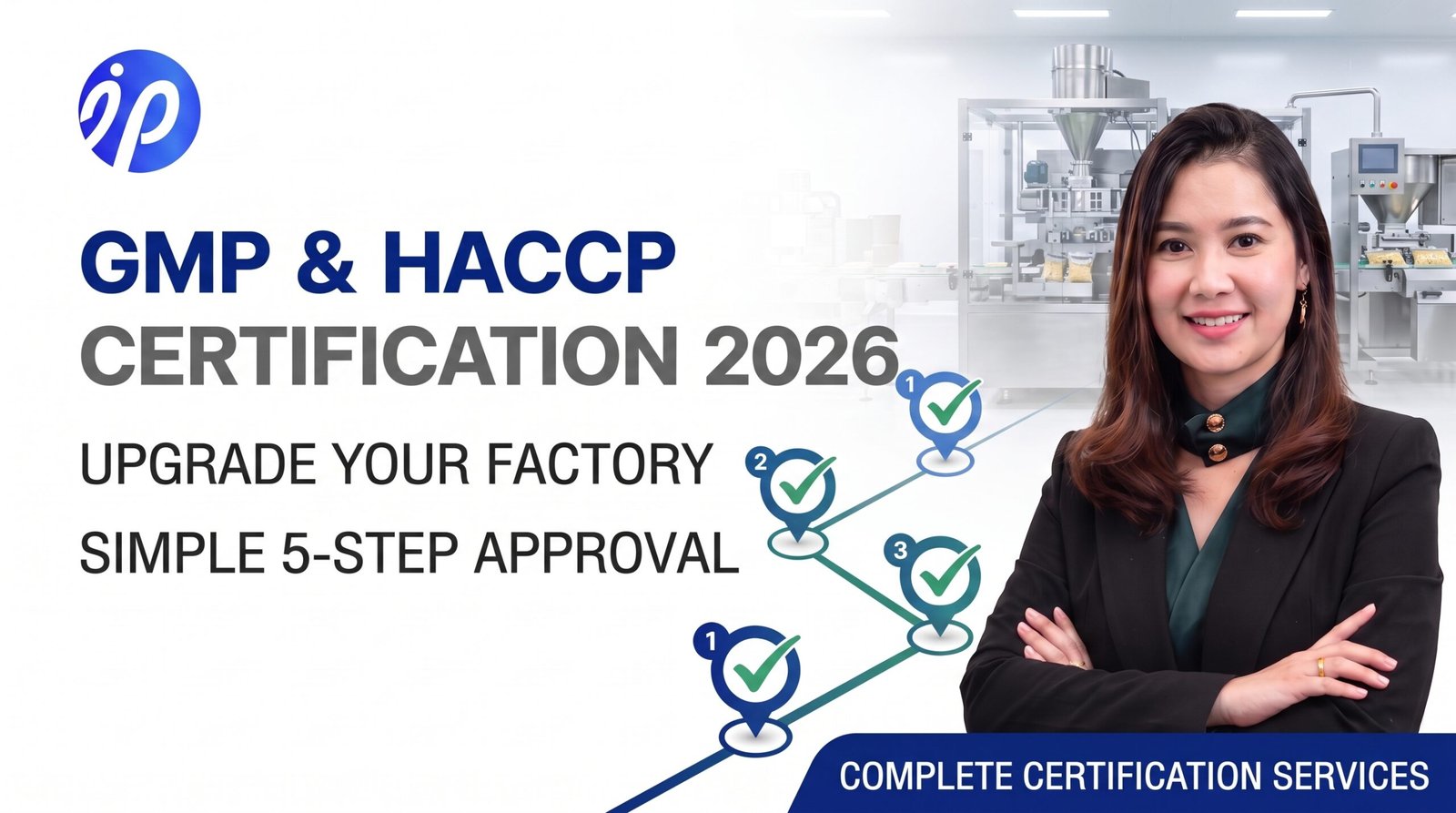
Why Is GMP HACCP Certification Thailand Vital for Food Manufacturers?
Attaining recognized hygiene and hazard control credentials proves that your manufacturing facility adheres to strict sanitation, risk prevention, and quality governance. Key commercial benefits of obtaining GMP HACCP certification Thailand include:
- Mandatory Legal Compliance (Thai FDA): Fully satisfies the Ministry of Public Health's statutory GHPs requirements for all commercial food processing facilities in Thailand.
- Modern Trade & Supermarket Acceptance: Premium supermarket chains (e.g., Central Food Hall, Tops, Lotus's, Big C) mandate certified GMP/HACCP facilities for private label and shelf listings.
- Global Export Readiness: Serves as an internationally recognized prerequisite for obtaining Export Health Certificates and entering overseas markets across North America, Europe, and Asia.
- Minimization of Production Waste & Recalls: Identifying Critical Control Points (CCPs) prevents biological, physical, and chemical cross-contamination, safeguarding your brand reputation.
5 Strategic Steps to Achieve GMP HACCP Certification Thailand Efficiently
Establishing an audit-ready food safety management system involves a clear 5-stage implementation roadmap:
Preliminary Facility Survey & Gap Analysis
Inspect existing building layouts, process flows, clean zoning, pest prevention barriers, and drainage systems to identify physical and structural non-conformities against Codex criteria.
Standard Operating Procedures (SOPs) & HACCP Plan Development
Formulate customized hygiene manuals, prerequisite programs (PRPs), equipment sanitation schedules, calibration protocols, and a comprehensive HACCP hazard matrix.
Personnel & Food Safety Team Training
Conduct specialized workshops for production supervisors and operational staff regarding personal hygiene, allergen handling, CCP monitoring routines, and corrective actions.
Internal Audit & Management Review Simulation
Execute mock audit sessions, review daily logs, test traceability systems from raw materials to finished batches, and rectify discrepancies before external assessment.
Accredited Certification Body (CB) Audit & License Issuance
Undergo Stage 1 (Documentation Review) and Stage 2 (On-Site Verification) audits with accredited third-party registrars, close Corrective Action Requests (CARs), and obtain official certification.
Comparison: Differences Between GMP (GHPs) and HACCP Systems
| Assessment Criteria | Good Manufacturing Practice (GMP / GHPs) | Hazard Analysis Critical Control Point (HACCP) |
|---|---|---|
| Core Focus | Plant environment, sanitation, personnel hygiene, and equipment design. | Specific process hazards, critical limits, and preventative CCP controls. |
| Primary Objective | Prevents general environmental and cross-contamination risks. | Controls specific points where food safety hazards can be prevented or eliminated. |
| System Relationship | The foundational prerequisite program required before HACCP. | An advanced, scientifically driven system built upon solid GMP principles. |
Essential Documentation Checklist for Certification Audits
Mandatory documentation required during third-party certification audits:
- Factory layout blueprint detailing hygiene zones, personnel flow, and material movements
- Complete Process Flow Diagram (PFD) and floor plan schematics
- HACCP Plan containing Hazard Analysis Worksheets and CCP determination charts
- Prerequisite Program (PRP) procedures (Cleaning, Pest Control, Waste Management, Water Quality)
- Annual employee health examination records and food handler training logs
- Laboratory test certificates for incoming water, key ingredients, and finished products
Frequently Asked Questions About GMP HACCP Certification Thailand (FAQ)
How long does the complete GMP / HACCP implementation process take?
Typically, the end-to-end process requires 2 to 4 months, depending on the scale of physical plant renovations, SOP drafting duration, and audit scheduling.
What is the validity period of GMP and HACCP certificates?
Certificates are generally valid for 3 years, subject to successful annual surveillance audits to maintain regulatory compliance.
Why choose Intelligent Global as your compliance partner?
Our regulatory advisors provide end-to-end support—from plant architectural advisory to SOP creation and audit accompaniment—guaranteeing first-time audit success.
Complete Regulatory Ecosystem for Enterprise Growth
Aligning your factory infrastructure with internationally recognized hygiene benchmarks accelerates all subsequent regulatory clearances, including FDA product registrations and industrial licensing.
Discover our comprehensive business compliance and corporate advisory solutions on the Intelligent Global Homepage.