TISI Certification Thailand: Complete Guide to Requirements, Process & Fast Approval
Manufacturing, importing, or distributing industrial and consumer goods in Thailand requires strict compliance with local safety standards. Obtaining a TISI certification Thailand license from the Thai Industrial Standards Institute (TISI / สมอ.) is a mandatory legal gateway for businesses aiming to enter the Thai marketplace smoothly and gain consumer trust.
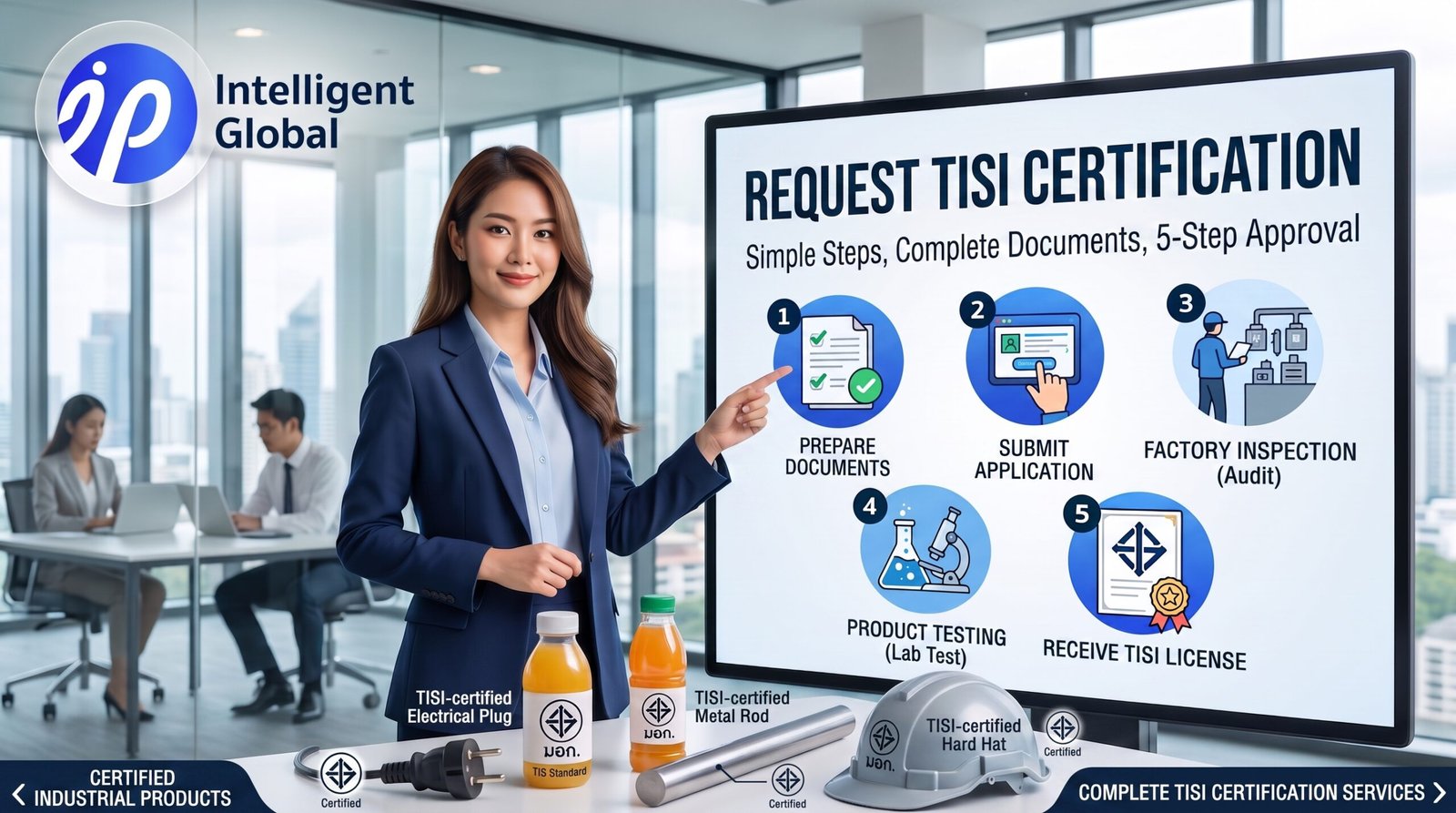
Why Is TISI Certification Thailand Vital for Your Business?
The TIS mark on packaging signifies that a product satisfies rigorous quality, performance, and environmental safety regulations set by the Ministry of Industry. Securing your TISI certification Thailand provides key commercial advantages:
- 100% Legal Market Clearance: Mandatory regulated goods (e.g., electrical appliances, steel, automotive parts, PVC pipes) cannot clear Thai Customs or be sold locally without valid TIS certification.
- Brand Authority and Trust: Local consumers and enterprise buyers prioritize certified items, significantly driving conversion and sales velocity.
- Modern Trade & Tender Eligibility: Having official TISI registration is an absolute requirement for bidding on government contracts and listing in major retail chains.
- Elimination of Heavy Legal Penalties: Prevents shipment seizures, severe financial fines, and operational suspensions under the Industrial Product Standards Act.
5 Key Steps to Obtain TISI Certification Thailand Efficiently
The path toward obtaining an official TIS certificate requires precise technical coordination and strict procedural alignment:
Product Classification & Standard Code Verification
Determine whether your specific product category falls under Mandatory TIS Standards or Voluntary Standards to select the exact testing scope and documentation route.
Factory Quality Control Assessment (Factory Audit)
TISI officers inspect manufacturing facilities to verify quality management systems (e.g., ISO 9001), incoming material checks, calibration records, and production consistency.
Sample Collection & Laboratory Testing
Official sample units are drawn and submitted to accredited testing laboratories in Thailand to assess electrical safety, chemical limits, and mechanical durability.
Technical Dossier & Mark Display Verification
Prepare technical specification documents, user manuals, wiring diagrams, and compliant TIS mark artwork with QR code integration as mandated by law.
E-License Submission & Certificate Issuance
Submit final audit reports and lab test certificates via the TISI E-License digital portal, settle official fees, and receive your legal certificate of approval.
Comparison of Thai Industrial Standards (TIS) Categories
| Certification Scheme | Regulatory Requirement | Product Examples |
|---|---|---|
| Mandatory TIS Mark | Legally required before manufacturing, importing, or selling in Thailand. | Power strips, household appliances, safety helmets, steel bars, tyres. |
| Voluntary TIS Mark | Optional certification to prove superior quality and boost customer trust. | Furniture, ceramics, textiles, household utensils, non-regulated goods. |
| Import License (TISI) | Required for registered Thai importers bringing regulated goods across borders. | Foreign-made lighting equipment, industrial power tools, consumer electronics. |
Essential Documents Checklist for TISI Applications
Required documents for factory audits and license applications:
- Company Affidavit / Commercial Registration Certificate (issued within 6 months)
- Copy of Director’s National ID / Passport and Work Permit (for foreign authorized signatories)
- Factory Registration License, operational site map, and factory floor layout
- Quality Control Manual, ISO 9001 certificate, and instrument calibration records
- Complete product technical specifications, schematics, component lists, and catalogs
- Power of Attorney (POA) and Manufacturer Authorization Letter (for imported products)
Frequently Asked Questions About TISI Certification Thailand (FAQ)
How long does the TISI certification process take?
The standard timeframe typically ranges between 30 to 90 business days, depending on factory audit scheduling, sample testing durations, and technical documentation readiness.
Can foreign manufacturers hold a TISI license directly?
A foreign factory can undergo audits, but the official license holder must be a registered Thai entity or an authorized local importer based in Thailand.
Why choose Intelligent Global for your TISI compliance?
Our regulatory specialists handle technical gap analyses, pre-audit factory checks, lab testing coordination, and liaise directly with TISI officers to eliminate delays and ensure first-time approval.
Streamline Your Industrial Compliance Strategy
Navigating Thai product regulations requires seasoned technical expertise and local administrative proficiency. Securing your TISI certification Thailand early mitigates compliance bottlenecks and ensures sustained commercial growth across Southeast Asia.
Explore our complete suite of corporate licensing and compliance services on our Intelligent Global Homepage.